
Golf and Your Body: How TPI-Certified Physical Therapy Keeps You Swinging Pain-Free
Golf looks gentle, but it asks a lot of your body. Every swing sends force through your feet, hips, spine, and shoulders in a fraction of a second — and it repeats a hundred times a round. Over a season, small limitations in mobility or stability turn into the aches that keep you off the course: low-back pain, a cranky lead hip, golfer’s elbow, or a shoulder that no longer rotates the way it used to.
Why generic advice misses the mark
Most “golf fixes” treat the sore spot. But the swing is a chain — if your hips don’t rotate, your lower back pays for it; if your thoracic spine is stiff, your shoulder overworks. Treating the symptom without finding the link in the chain is why the pain keeps coming back.
What TPI certification changes
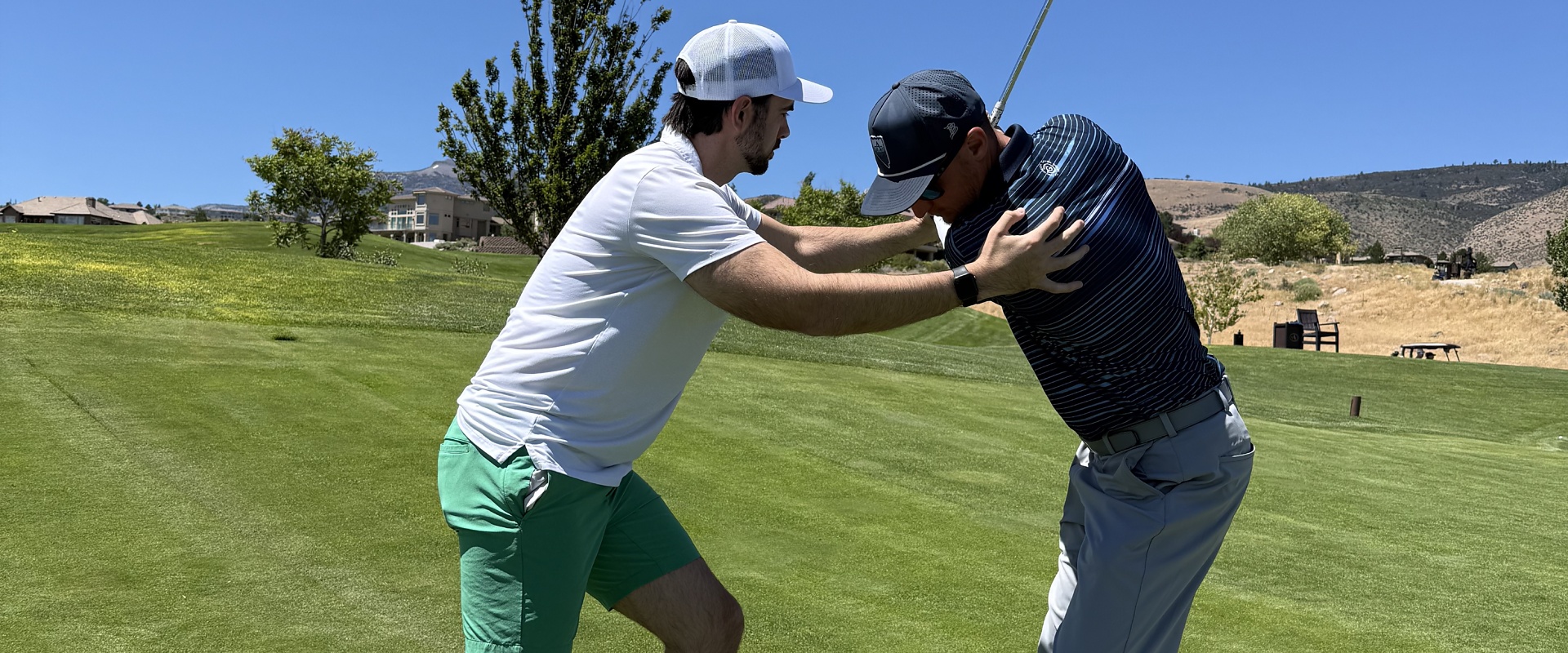
I’m certified through the Titleist Performance Institute (Level 2 — Medical, Junior, and Fitness), and I work with players at one of the area’s top golf country clubs. TPI is built around one idea: your body and your swing are connected. We screen how you move — hip and shoulder rotation, spine mobility, balance — and match it to what your swing is actually doing. That tells us whether we’re looking at a mobility problem, a stability problem, or a strength problem, and we build the plan from there.
The goal: keep you playing
You don’t have to stop golfing to get out of pain. We assess, address the real driver, and give you a program that fits your game — so you can swing freely and finish the round feeling good. If golf is your thing and your body is getting in the way, let’s talk.